

So Mother’s Day is upon us.
A day that has, inevitably, like so many other traditions, radically moved away from its original form, its 16th century origins.
Then, it was not, naturally, an event about flowers sold at inflated prices and cards and special Sunday lunch menus cashing in on the day.
In fact, it was not even about mothers at all.
With its roots firmly in religion, it was the fourth Sunday in Lent when people visited their mother-church in the local parish where they had been baptized and was originally called Refreshment Sunday.
Falling in the middle of Lent, a time of fasting and abstinence, there was a licence given on this one day for breaking that fast.
Slowly evolving into something closer to our own understanding of the day, Going a-Mothering became the annual Sunday when servants and apprentices were given the day off to visit their mothers as well as their home churches.
Picking wild flowers and baking Simnel cakes became synonymous with what was called Mothering Sunday and in 1914, the British government officially recognised Mother’s Day, still to be celebrated on the fourth Sunday of Lent – and thus it found its way into diaries as a day devoted- ideally, anyway – to appreciation and recognition of mothers and motherhood.
19th century literature seems to provide us with mothers who are either impossibly saintly and wise (think Marmee in Little Women), embarrassingly awful, feckless or incompetent – Jane Austen serves us well on this score – or absent from selfishly dying and depriving our protagonist of a loving maternal figure – Jane in Jane Eyre, Oliver in Oliver Twist, Pip in Great Expectations …I could go on. Absent mothers seem to be a popular trait of classic novels, conveniently casting our hero/heroine into murky and unpleasant waters without the support of maternal care.
More contemporary literature also gives us absent mothers and their death or disappearance is also often used as the catalyst for the main character’s subsequent life, again a useful tool for the novelist – Donna Tart’s The Goldfinch, Valerie Martin’s The Confessions of Edward Day and, dare I mention it, my own The Odyssey of Lily Page come into this category by making use of this propelling cause.
Then there’s Carol Shields’ novel, Larry’s Party, where it’s a notably absent Grandmother who casts a curious shadow over proceedings …
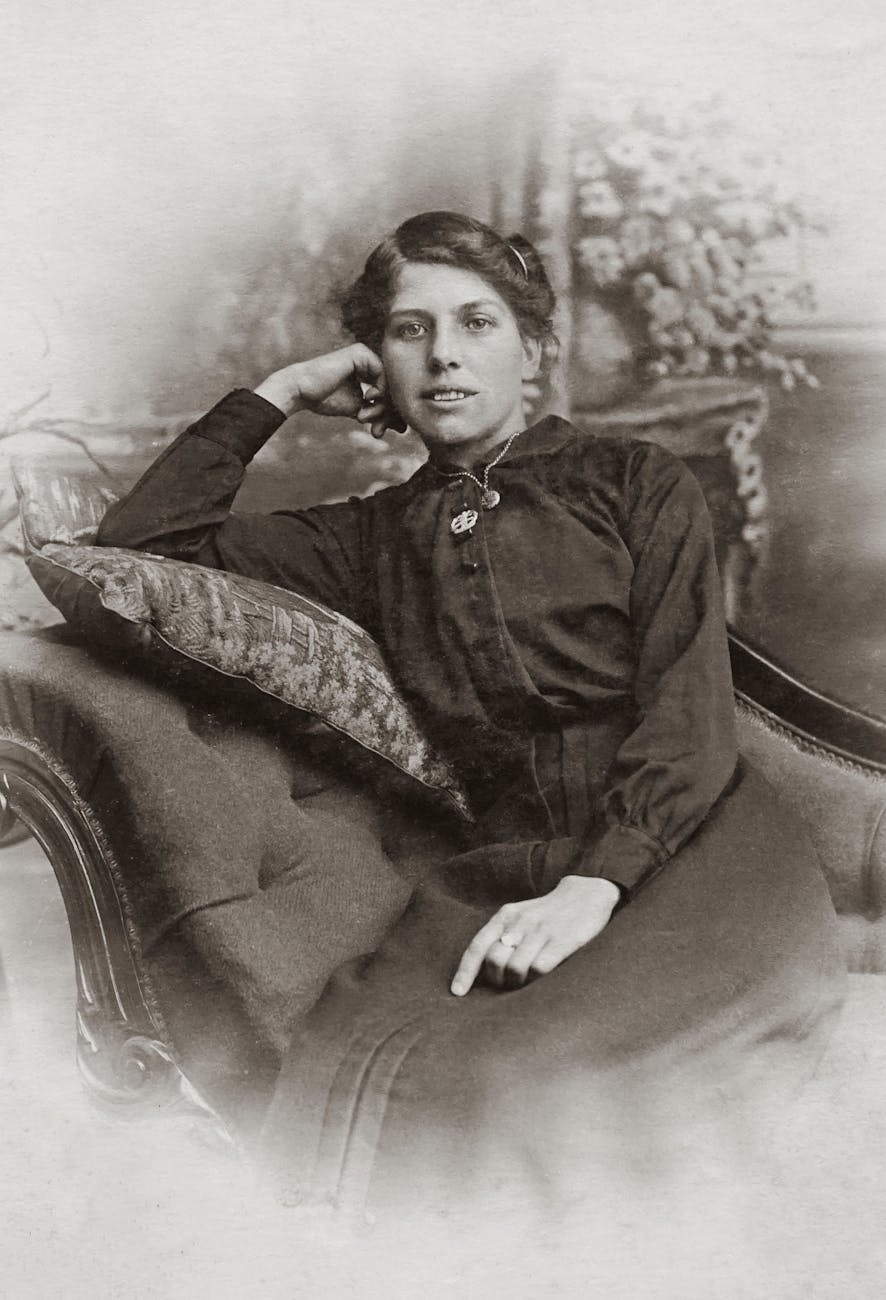
Which conveniently takes me to where I want to reach – which is beyond current mothers being feted on Mother’s Day but back to their mothers, and theirs and .theirs and…to our forefathers – or rather to our foremothers as I like to think of them.
Our Great Grandmothers, and our Great-Great Grandmothers and all the Greats lying behind them had, to put it mildly, such very different experiences of motherhood that I feel they deserve our attention on today of all days. They merit a focus, those women who are entirely absent from our lives yet crucial to our very being.
Their lives – our Edwardian, our Victorian – and earlier – foremothers endured, no doubt, endless uncontrolled pregnancies, long and painful labours and deliveries, the threat of infant and maternal mortality before they had even carried a baby safely home – and a home that was no doubt (except for the very few) overcrowded and absent of any labour-saving devices.
Husbands, however loving, were hardly likely to have been ‘hands-on’ with the child-care and the main support would have been to turn to the oldest daughter, no doubt still a child herself, for help.
My maternal Grandmother was the oldest daughter in a family of eight surviving children. She used to say that she only had one child herself – my mother – as she felt she had already spent a decade or more in caring for her siblings.
And what were their rights, these women, our Edwardian and Victorian Great and Great- Great and Great-Great several times over?
Minimal.
No vote.
No salaries.
No child allowances.
And little time, no doubt, simply to enjoy their children, delight in their very existence, watch their progress and development. And those children would have had to grow up fast – to make room for the next baby at the breast, the next toddler clambering for a space on mother’s knee.
Our Greats and Great-Greats et al must have been extraordinarily strong women.
Strong and resilient. Social and domestic circumstances forced that upon them. Choice was rarely theirs.
So today seems a good moment to pause and think of them, think of the long line of mothers trailing behind us, connecting us to their lives, to the generations of women for whom, possibly, a bunch of wild flowers and a simnel cake were hotly anticipated gifts from their many offspring on the fourth Sunday of Lent.
Whether anyone cooked them a Sunday roast or made them stay in bed for an extra hour for a cup of tea and slice of charred toast is, however, highly unlikely!
Leave a Reply