
There are not many regular habits that feature in every single month, year and decade of our lives.
Most attach themselves firmly to a particular age or stage of growing up,
Childhood games give way to adolescent interests and gradually morph into the preoccupations of adulthood.
So I find it consoling to think that something I enjoyed doing from a very young age still sustains me as a source of pleasure now that I am …well, a woman in the possession of quite a number of accrued years.
Libraries.
A visit to a library.
My earliest memory of a library stems, probably, from before I could even read.
I remember a very old building, small, squat, near Woolworths in Pinner.
There, I must have acquired my first library cards as my mother acquired books on my behalf.
Soon, however, there was great excitement in Pinner!
The old library was replaced in another location in the town with the splendid, parquet-floored new public library – enormous it seemed to me – and that was the place where I was to spend aeons of time over the next 20 or so years.
For libraries have always been safe spaces. Harmonious places.
Somewhere to spend an hour or so after school or before a ballet class or awaiting your mother or father to arrive to take you home. Places to do your homework or revise for your exams.
Places to draw your excitement as you spot a new Lorna Hill or Pamela Brown or Noel Streatfeild novel that you have not read!
And then later, that transition into the adult section – no YA shelves when I was in my teens, of course – and the gradual discovery of L.P. Hartley and H.E. Bates and Lynn Reid-Banks and Margaret Drabble and so many more.
Such delights – and free delights! – waiting to offer escapes into other worlds. To learn about other lives.
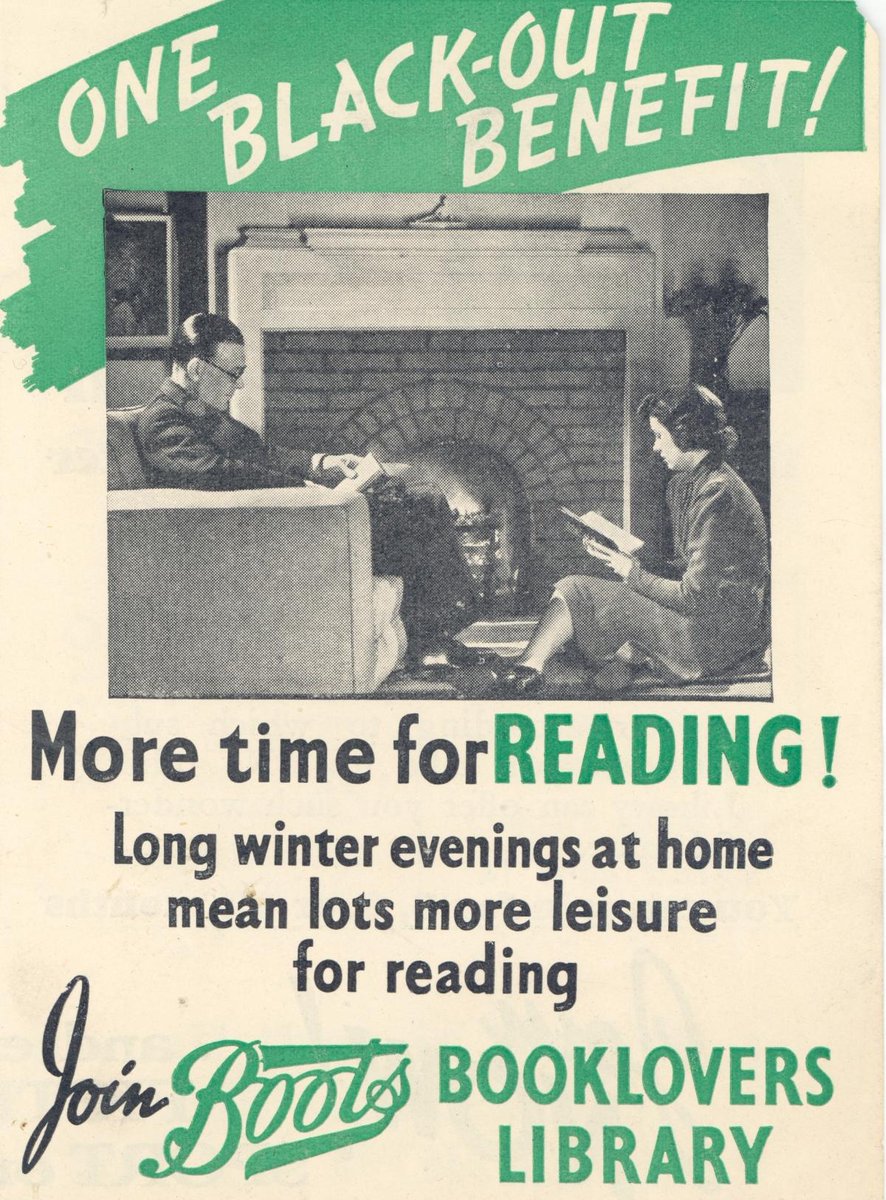
Of course, at one time our high street chemist, Boots, was the provider of the Boots Booklovers Library.
Researching for my fifth novel, set in London in WW2, has sent me down the path of finding out all about this wonderful institution that was so familiar to readers in the first half of the 20th century.
Subscription and circulating libraries were a feature of 19th century England with Mudie’s Select Library and W.H. Smith establishing themselves in the Victorian era. Then Jesse and Florence Boot opened their first libraries in their two Nottingham chemist shops and provided attractive and comfortable surroundings with the addition of in-store cafes to lure potential readers and subscribers. Very soon, their bookish empire had grown until there were numerous Boots Booklovers’ libraries all over the country.
And what could be better? A pleasant morning spent choosing books followed by coffee and scones with a friend, sitting at a table covered with a hand embroidered cloth – idyllic!
So yes, Boots’ subscribers were mainly middle class and mainly female and they could choose between either Class A or B subscriptions, the former costing an annual 17s 6d. whereas the latter cost 10s 6s.
Class A subscribers could borrow any book they chose whereas Class B readers were confined to books over a year old. A certain class divide here that spoke to the status quo of the times!
In my new novel, the character of Connie works at Boots Book Lovers’ Library in Hammersmith. She also contributes to the war effort by being a member of the WVS and working on mobile canteens serving civil defence workers. She is only a minor character in the novel – but the creation of Connie has given me a wonderful excuse to delve into the history of Boots Book Lovers’ Libraries and if anyone is interested, I recommend highly the book Lipsticks and Library Books, by Jackie Winter which is a wonderful exploration of this national institution that dominated the library scene for over 60 years.
Nowadays, libraries have become a political issue in so many areas with closures threatened or realised and what an appalling loss to any community this causes. Some have been rescued to become community hub libraries through valiant fund-raising and volunteering local efforts and therefore survive against the odds.
Others, like my local library, have become Discovery Centres or Arks or whatever new terminology is applied to places that are now so much more than lending libraries with extensive IT provision, cafes (but no hand embroidered table cloths now on show …) exhibition spaces, gift shops and so much more.
Which is wonderful.
And I still find myself spending much time browsing, reading, delighting if I find a particularly treasured author or desired title on the shelf, coveting it as if coming across a small nub of gold.
Boots libraries thrived in the 1930s and 40s but gradually their popularity waned and they found it hard to survive the very different post war world of the second half of the 20th century. Falling memberships and rising costs contributed to their decline and finally, in 1965, all libraries were closed.
Fortunately for my fictional character, Connie, her services at Hammersmith Book Lovers’ library were still very much in demand in the war years when reading during the endless blackouts, in damp shelters, underground stations, in basements and church crypts during an air raid was entertainment and diversion.
Meanwhile, I will continue to love libraries and seek them out wherever I am.
It will come as no surprise, therefore, to hear that my friend of longest standing – trailing all the way back to the first days of infant school – is a librarian herself.
We obviously both had some curious foresight of future fate and destinations as we chose each other to befriend even before celebrating our respective fifth birthdays!
Leave a Reply