

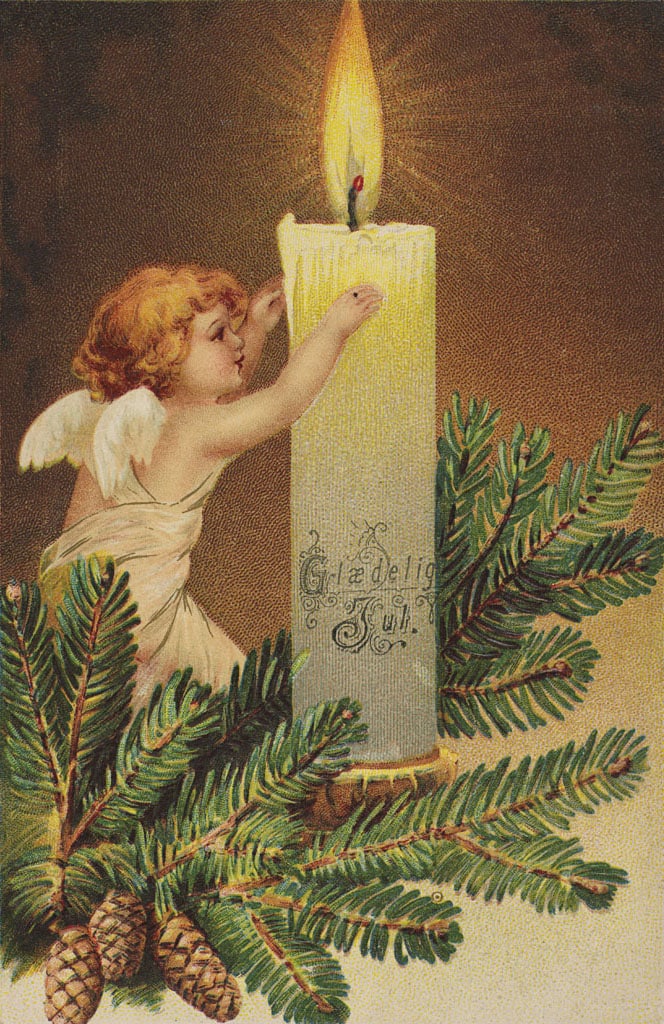
Christmas literary references are a bit like Christmas itself.
The sources of Bah! Humbug! and Christmas won’t be Christmas without any presents come swiftly to mind – but trying to be more original is hard. There’s C.S.Lewis’ The Lion, the Witch and the Wardrobe, with the sad cry from poor Mr. Tumnus that:
It is winter in Narnia and has been for ever so long …always winter, but never Christmas.’
but again that’s hardly an original thought.
Then there are the carol singers – the field mice – in The Wind in the Willows who entertain Mole at Mole End. Again, a very well-known – and therefore cliched – reference.
Of course before Christmas was elevated by Dickens and Prince Albert in the mid 19th century it was a far quieter season with religious observance at its heart rather than a cascade of crackers and cranberries and an excess of expenditure and entertainment. No reason for novelists to think it an event worth working into the narrative.
So it’s the cliches of A Christmas Carol, Little Women, Narnia and performances of The Nutcracker ballet and Peter Pan that come to mind when thinking of Christmas.
But like most cliches they only exist as such and linger because they are good. Apt. Worth an annual revival.
And isn’t that partly what Christmas celebrations are about? A once-every-12 months revival of remembering friends – remote and near – reviving memories, digging out a particular recipe, reaching for the box of vaguely familiar decorations that live for 49 odd weeks of the year occupying precious storage space at the top of the tallest cupboard?
They are talismen, if you like, providing the consolation of tradition and continuity.
In the perpetual maelstrom of our daily lives, marking the season in the well-trodden footsteps of past Christmas tides with our own established rituals is reassuring. At least I find it so.
I am sure it is the same with all religions, with people of all faiths and none. Festivals provide a bond of continuity of sorts, marking a particular event in religious calendars but also offering a structure to the year. A sense of shape and purpose.
Equally, of course, such celebrations can underline the pain of loss and can be poignant in other ways, underlining what has changed or not been fulfilled during the past 12 months ….it is by no means a season of unmitigated joy for many.
But this isn’t a sermon – and I need to get back to literature. To dwell on the lighter, brighter side of Christmas.
So if I can’t think of any original literary references to blog about, I will unashamedly indulge in the cliches.
And John Betjeman’s poem Christmas is always a favourite of mine to read at this time of year, alongside T.S.Eliot’s The Journey of the Magi for a more sombre, profound note.
And while I’m in a poetic vein, Laurie Lee’s Christmas Landscape is another that’s on my Christmas poetry reading list. (not that I have anything as organised as that – the only lists around my house at the moment are far more prosaic itemising potatoes, paprika, peppers, carrots, cream and more …)
But to return to Kenneth Graham’s carol singing field mice – I will let them have the last word:
Villagers all, this frosty tide,
Let your doors swing open wide,
Though wind may follow, and snow beside,
Yet draw us in by your fire to bide;
Joy shall be yours in the morning!
And to end in the most cliched of ways:
A very happy and joyous Christmas to you all!
Leave a Reply